

Mainstream VPNs are losing a fight most users never see. Deep packet inspection (DPI) systems in Russia and China now fingerprint OpenVPN and even WireGuard traffic, and censors block it at the ISP level before it ever reaches a blocked site. Brand size doesn’t fix that problem. Protocol design does.
Hiro VPN enters the market with that exact problem in mind. It doesn’t try to out-market NordVPN or ExpressVPN on trust and history. Instead, it leans on a newer protocol stack — VLESS with REALITY — built specifically to defeat DPI. This review looks at whether that trade-off holds up, and where it doesn’t.
Also Read: Unlock Unlimited Streaming with 10 Best VPNs of 2026
What Is Hiro VPN?
Wolle Development Limited develops Hiro VPN, and you can run it on Android, iOS, Windows, macOS, and Linux, or install it on a router as firmware. Every new user gets a 7-day free trial with no card required.
You should know who Hiro VPN targets before you evaluate it. The product centers on censorship circumvention, and it clearly optimizes for users navigating restrictive digital environments globally. It accepts a wide range of international payment options alongside cards and crypto, runs specialized multi-region routing servers to help users overseas maintain access to geo-restricted local services back home, and handles customer support primarily through Telegram rather than traditional email or ticketing systems. None of that disqualifies it for standard users, but it explains where the product’s priorities lie.
Key Features
- AES-256 encryption
- VLESS protocol with multiple transport and obfuscation modes
- Kill switch
- Built-in ad blocker
- Split tunneling (app/site exclusions)
- Multi-hop routing and Tor-over-VPN support
- Servers in 50+ countries
- Router firmware for whole-network protection
How It Works: The VLESS + REALITY Angle
Most consumer VPNs use OpenVPN or WireGuard protocols that create their own encrypted tunnels and carry recognizable traffic signatures. DPI systems have learned to spot those signatures, and Roskomnadzor in Russia has already blocked hundreds of VPN services that rely on them. VLESS takes a different approach. It carries no built-in encryption at all; instead, it hands that job entirely to the transport layer underneath it — TLS, or a security mode called REALITY.
Hiro VPN offers several transport options, and each one changes how your traffic looks to a network observer:
- TCP + TLS wraps the connection in a standard encrypted handshake.
- WebSocket disguises the connection as an ordinary browser upgrade request, which lets it hide behind a CDN like Cloudflare.
- gRPC rides on HTTP/2, so it mimics normal API traffic between apps.
- REALITY goes furthest: instead of presenting its own certificate, the server borrows the real TLS handshake of a legitimate, unrelated site — a major CDN or a well-known domain. A censor inspecting the connection sees what looks like an ordinary visit to a trusted website, not a VPN tunnel.
This combination gives Hiro VPN a real, specific advantage in exactly the environments it targets. Independent technical documentation on VLESS+REALITY reports high resistance rates against advanced Deep Packet Inspection (DPI) censorship during major blocking waves worldwide, giving users in restricted regions a level of resilience that traditional OpenVPN-based tools historically couldn’t match.
Where This Matters Least?
If you live somewhere without active DPI blocking and you mainly want Netflix access and general privacy on public Wi-Fi, VLESS’s DPI-evasion strength buys you little.
A WireGuard-based competitor delivers comparable speed, and WireGuard’s open-source, widely audited codebase gives you something REALITY doesn’t: a protocol security researchers have already stress-tested for years.
Installing and Setting Up Hiro VPN (Step-by-Step)
You can get Hiro VPN running in a few minutes on any platform. Here’s what the process looks like.
On Mobile (Android or iOS)
- Download the app from Google Play, the App Store, or, on Android, the Huawei AppGallery or a direct APK from Hiro VPN’s site.
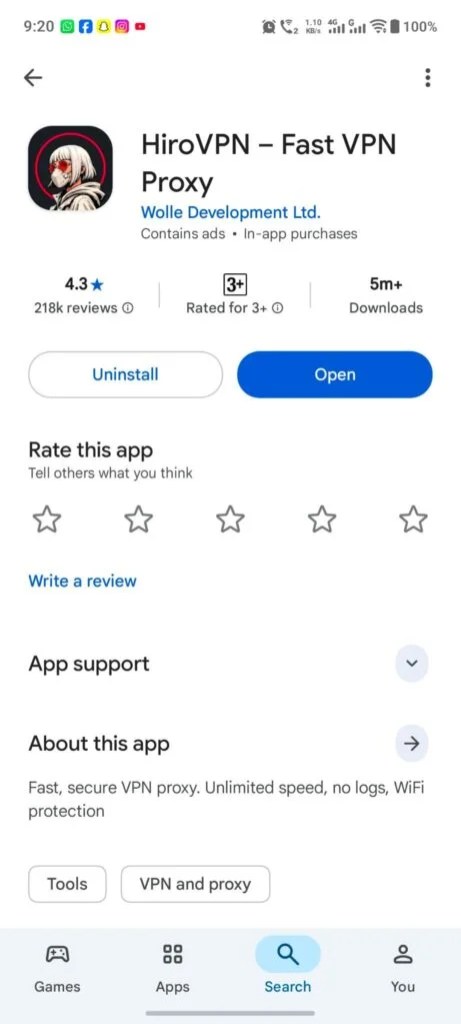
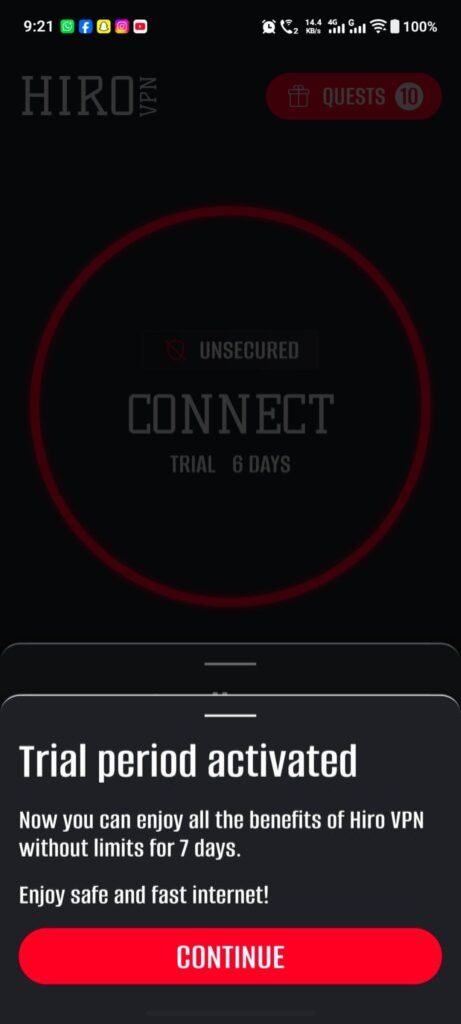
- Open the app and start your 7-day free trial. You don’t need to register with an email or phone number to start the trial.
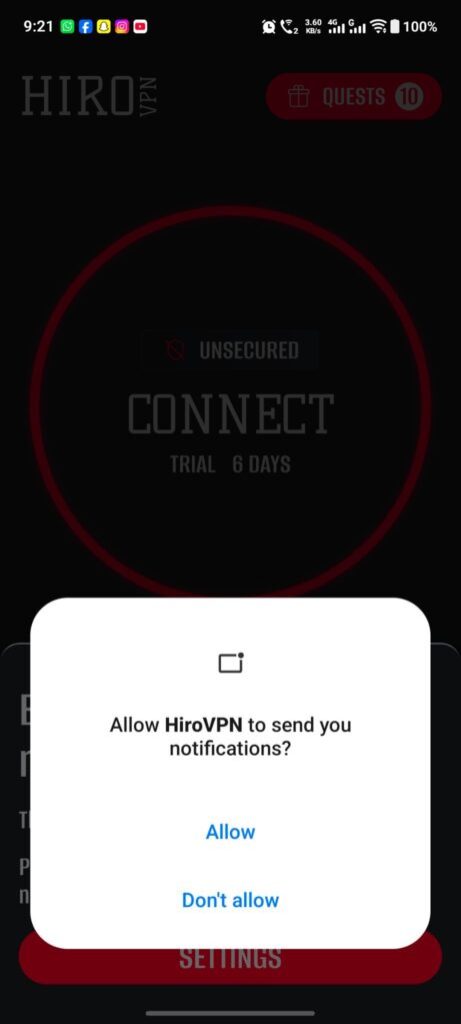
- Grant the VPN permission your phone’s OS requests (this is standard for any VPN app, not specific to Hiro VPN).
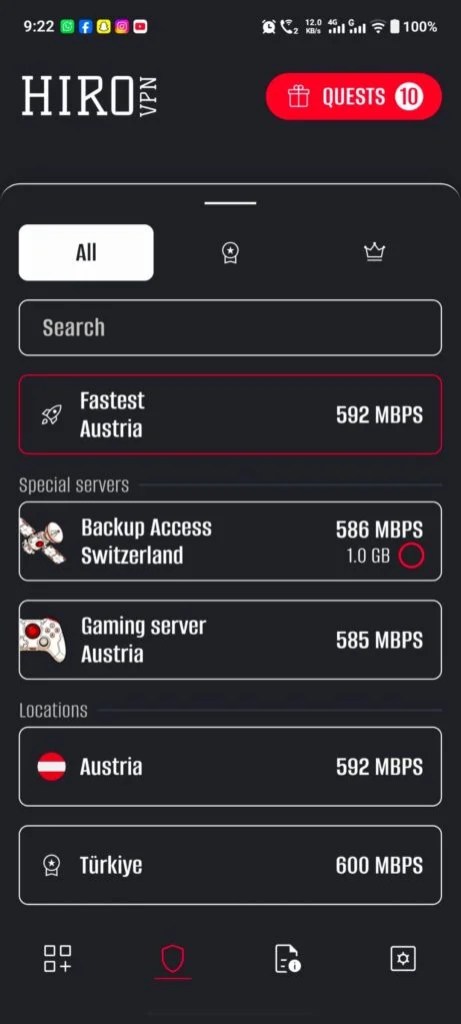
- Pick a server. The app highlights speed per server, so choose the fastest option in your target country rather than the first one on the list.
- Tap Connect. The app confirms the connection status and keeps that status in sync even if you switch to another app.
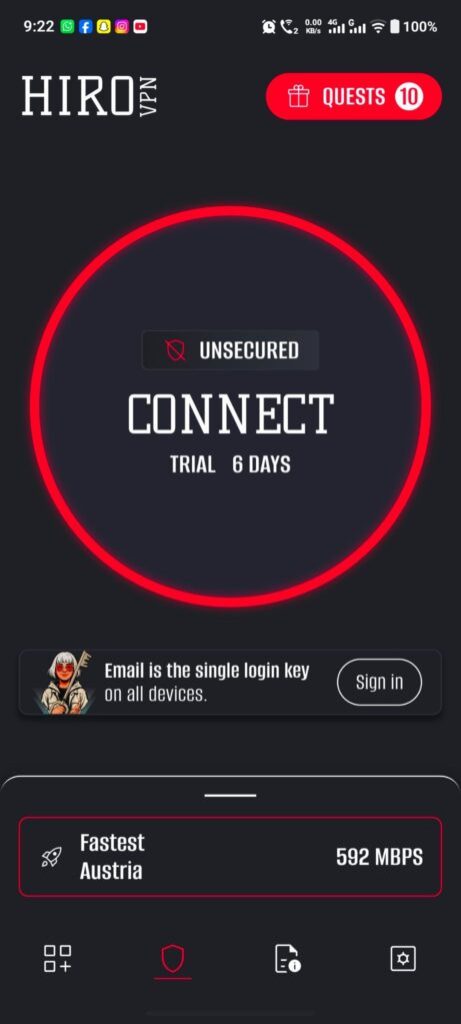
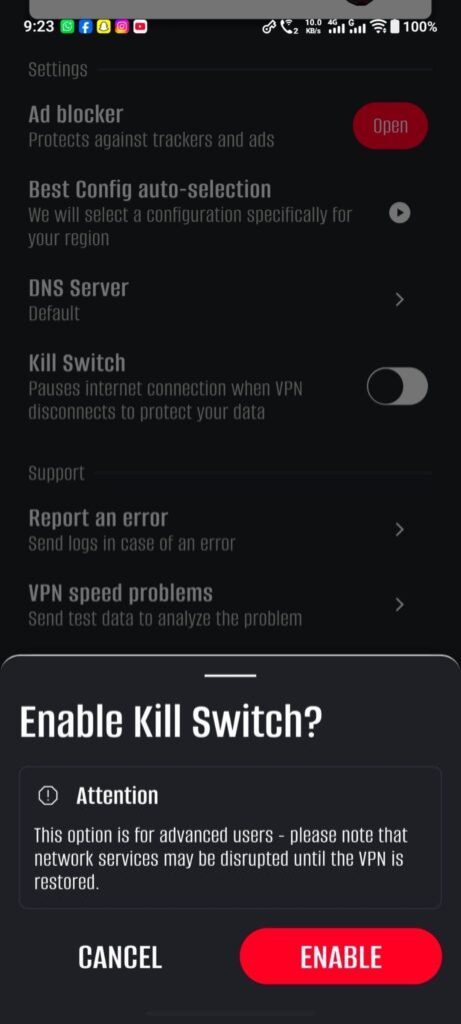
- Turn on the kill switch and set up split tunneling (called “exclusions” in the app) under Settings if you want specific apps or sites to bypass the VPN entirely.
On Desktop (Windows, macOS, Linux)
- Download the installer for your platform from Hiro VPN’s site (Windows and Linux ship as direct downloads; macOS installs through the App Store listing). We’ll install it in a Windows environment.

- Run the installer and launch the app.

- Once the installation is completed, log in or start your trial the same way as on mobile; no separate desktop account is required.

- Select a server and click on Connect. Desktop settings show the same kill switch and ad-blocker toggles as mobile.

On a Router
Hiro VPN takes two different paths here, and you should pick based on what hardware you already own:
- Buy a pre-configured router. Hiro VPN sells two GL.iNet models — the GL-MT3000 (Beryl AX) and the GL-MT6000 (Flint 2) — with its firmware, VPN client, and ad blocker already installed. You order it, Hiro VPN assembles and tests it, and you plug it in; the protected network comes up automatically with nothing to configure.
- Flash your own router. If you already own a GL-MT3000 or GL-MT6000, you can download Hiro VPN’s firmware installer (Windows, macOS, or Linux versions are available) and flash it yourself, following the published PDF instructions. Hiro VPN reports this takes a few minutes and gives you the same functionality as the pre-configured unit after a reboot.
A Note on Protocol Configuration
Advanced Xray/V2Ray users who are used to hand-editing VLESS configs choosing TCP versus WebSocket versus gRPC, or wiring up their own REALITY target domain won’t find that level of manual control in the Hiro VPN app. The app selects and switches between transport and obfuscation modes automatically based on what it detects about your ISP and regional blocking conditions.
That’s a reasonable default for a mainstream consumer app, and it matches how most competitors handle protocol selection. If you specifically want to hand-tune your own VLESS+REALITY setup, you’d need to run Xray-core yourself rather than use any consumer VPN app, Hiro VPN included.
Trust & Transparency: The Gap
Hiro VPN states a strict no-logs policy, but no independent auditor has verified it. Compare that to the established field: NordVPN has published multiple no-logs audits through Deloitte, ExpressVPN’s most recent audit came from KPMG, Proton VPN uses Securitum, Surfshark uses Deloitte, and Mullvad has opened its code to Cure53. Hiro VPN has none of that yet.
The company also publishes no transparency report and no warrant canary, so you can’t check how it has historically responded to legal requests for user data. And Wolle Development Limited is a young company; the app launched in 2024 with no visible security-research relationships or public funding history to weigh against its claims.
None of this means the no-logs claim is false. It means the claim is currently unverifiable, and that distinction matters if your threat model goes beyond casual privacy.
Pros and Cons of Hiro VPN
The following table represents some pros and cons that help users make a strong decision about using Hiro VPN:
| Pros | Cons |
| VLESS + REALITY genuinely resists DPI-based blocking | No-logs policy remains unaudited |
| Ships with kill switch, split tunneling, and multi-hop | No transparency report or warrant canary |
| Router firmware supports up to 10 devices | Young company with a limited independent track record |
| 7-day free trial requires no card | Marketing and support are tailored primarily to regional markets with high censorship rather than a general global audience. |
| Pricing undercuts most established brands | Reviews cluster on the Play Store and Yandex rather than independent aggregators like Trustpilot |
Pricing
Hiro VPN sells three tiers: Base, Premium, and Legend; each available on weekly, monthly, or annual billing, and each backed by a 30-day money-back guarantee.
| Plan | Devices | Servers | Monthly Price | Annual Price |
| Base | 3 | 80+ | 3.75 USD | 23.94 USD |
| Premium | 5 | 100+ | 5.01 USD | 24.57 USD |
| Legend | 10 | 130+ | 7.52 USD | 35.76 USD |
All tiers include unlimited traffic, a kill switch, and ad blocking; the plans differ only on device limits and server access. Hiro VPN accepts major credit cards and cryptocurrencies alongside regional payment processors. One catch for international readers: pricing is listed in local currency on the site without an automatic display toggle for USD or EUR, so you’ll need to run a quick manual conversion before comparing costs against dollar-denominated competitors.
Also Read: Top 11 VPS Hosting Providers 2026: Powerful Servers Under Budget
Who Should Use It?
Hiro VPN is a good fit if you live in or regularly connect through a heavily censored network and specifically need protocol-level DPI resistance. The VLESS/REALITY stack solves a problem that most mainstream VPNs still haven’t addressed.
Hiro VPN may not suit you as well if you prioritize an audited, independently verified no-logs guarantee, or if you’re a mainstream streaming and privacy user with no censorship to evade. In that case, an established, audited VPN remains the safer default.
How Hiro VPN Compares with Other VPN Solutions
The table below compares Hiro VPN with other VPN platforms.
| Hiro VPN | NordVPN | Mullvad | X-VPN | |
| Primary protocol | VLESS (+REALITY) | NordLynx (WireGuard-based) | WireGuard | Proprietary + WireGuard |
| No-logs audit | None yet | Deloitte (multiple) | Cure53 (code) | Independently audited (2026) |
| Jurisdiction disclosed | Not clearly published | Panama | Sweden | Singapore |
| Router firmware | Yes | Via third-party routers | Via third-party routers | No |
| Starting price | Below most major brands | Mid-range | Low, flat rate | Mid-range |
Verdict about Hiro VPN
Hiro VPN backs up a specific, well-executed technical claim: VLESS with REALITY genuinely beats DPI in ways mainstream VPN protocols don’t. It pairs that strength with a real weakness: an unaudited no-logs claim and a short track record of transparency.
You can choose Hiro VPN if you need its protocol advantages and are willing to accept the current trust gap. Choose an audited competitor if verified privacy claims matter more to you than protocol-level censorship resistance.
Also Read: ZTNA vs VPN: Which One Is the Better Cybersecurity Solution?
FAQs
Is Hiro VPN’s no-logs claim independently verified?
No. Hiro VPN states a no-logs policy, but as of this review, no third-party auditor has verified it. That puts Hiro VPN behind established competitors like NordVPN (audited by Deloitte), ExpressVPN (audited by KPMG), and Mullvad (code reviewed by Cure53), all of which publish independent audit results.
What makes Hiro VPN’s VLESS protocol different from OpenVPN or WireGuard?
VLESS carries no encryption of its own — it relies on the transport layer (TLS or REALITY) for security, which lets it mimic ordinary web traffic instead of producing a recognizable VPN signature. This gives it stronger resistance to deep packet inspection (DPI) blocking than OpenVPN or WireGuard, both of which censors like Roskomnadzor already detect and block at scale.
Does Hiro VPN work in countries with heavy internet censorship, like Russia?
Yes, and that’s the primary use case it’s built for. Hiro VPN’s REALITY-based transport mode disguises VPN traffic as a connection to a legitimate, trusted website, which is specifically designed to defeat DPI-based blocking. The product’s payment options, support channel, and reverse-VPN server for reaching Russian services all confirm this focus.


